Symphony of Horizon Logo
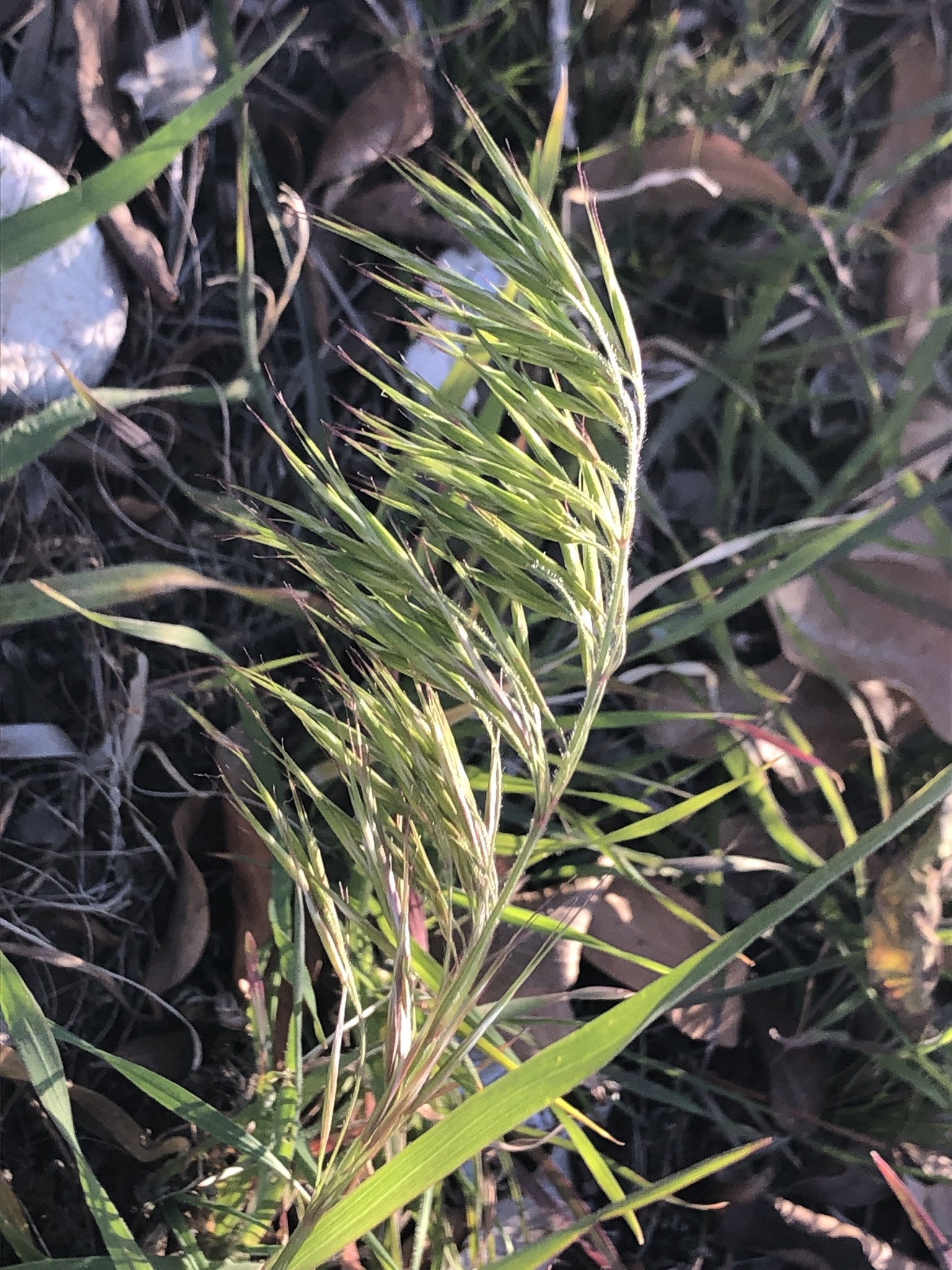
Bromus tectorum

Bromus tectorum

Status
Not Evaluated

IUCN conservation assessment category

Habitat
tropical palm groves, open savannah grassland plains, and warm coastal dunes

Primary ecological niche & biome

Diet
photosynthetic solar energy conversion, shallow root water absorption

Dietary type and primary food source

Activity
year-round tropical foliage growth, seasonal flowering under wet cycles

Diurnal, nocturnal, or active patterns

Scientific Summary

GBIF Taxonomic Backbone & Wikipedia Registry Profile

Bromus tectorum, known as downy brome, drooping brome, or cheatgrass, is a winter annual grass native to Europe, southwestern Asia, and northern Africa, but has become invasive in many other areas. It now is present in most of Europe, southern Russia, Japan, South Africa, Australia, New Zealand, Iceland, Greenland, North America, and western Central Asia. In the eastern US, B. tectorum is common along roadsides and as a crop weed, but usually does not dominate an ecosystem. It has become a dominant species in the Intermountain West and parts of Canada, and displays especially invasive behavior in the sagebrush steppe ecosystems, where it has been listed as noxious weed. B. tectorum often enters the site in an area that has been disturbed, and then quickly expands into the surrounding area through its rapid growth and prolific seed production. The reduction of native plants and the increased fire frequency caused by B. tectorum prompted the United States Fish and Wildlife Service (USFWS) to examine if the greater sage-grouse needed to be listed as a threatened or endangered species due to habitat destruction. After the review was completed by the USFWS, Secretarial Order 3336 was signed with the goal of reducing the threat of rangeland fires and preserve habitat by reducing downy brome. Research has shown that ecosystems with a healthy biological soil crust and native plant community are resistant to B. tectorum invasion. In areas where B. tectorum is invasive, treatments that are being researched/used by land managers to control B. tectorum include seeding of native plants and non-native bunchgrasses to outcompete B. tectorum, herbicides, and prescribed burns. The effectiveness of these treatments is tightly linked to the timing of the water availability at the site. With precipitation shortly after herbicide and seeding treatments increasing the success, and overall high precipitation increases B. tectorum growth, causing the treatment effects to be statistically insignificant.
Biology & Conservation

Ecologically, the conservation status of Bromus tectorum is officially designated as Not Evaluated. Current field registries estimate a global population composed of an unquantified number of individuals, making habitat preservation critical to maintaining their wild populations.

It is typically endemic to tropical palm groves, open savannah grassland plains, and warm coastal dunes, showing great physiological synergy with its surroundings. In terms of dietary preferences, it relies primarily on a diet of photosynthetic solar energy conversion, shallow root water absorption. It exhibits specialized adaptations centered around a year-round tropical foliage growth, seasonal flowering under wet cycles activity pattern, optimizing its energy conservation and interactions within its native ecosystem. The species has a typical natural lifespan of approximately 60 years, allowing it to adapt and mature through structured generational cycles.

Ongoing biological monitoring and ecological advocacy emphasize the importance of protecting this species. The stability of its food chain and the prevention of fragmentation in its primary range are vital for the continued survival of Bromus tectorum.

Energy & Activity Profile
Habitat & Adaptation Index
Quick Facts
Native RangeGlobal
Habitat Rangetropical palm groves, open savannah grassland plains, and warm coastal dunes
Lifespan60 Yrs
StatusData Deficient
ScientificBromus tectorum
Registry Info
Lifespan60 years
KingdomPlantae
FamilyPoaceae