Symphony of Horizon Logo
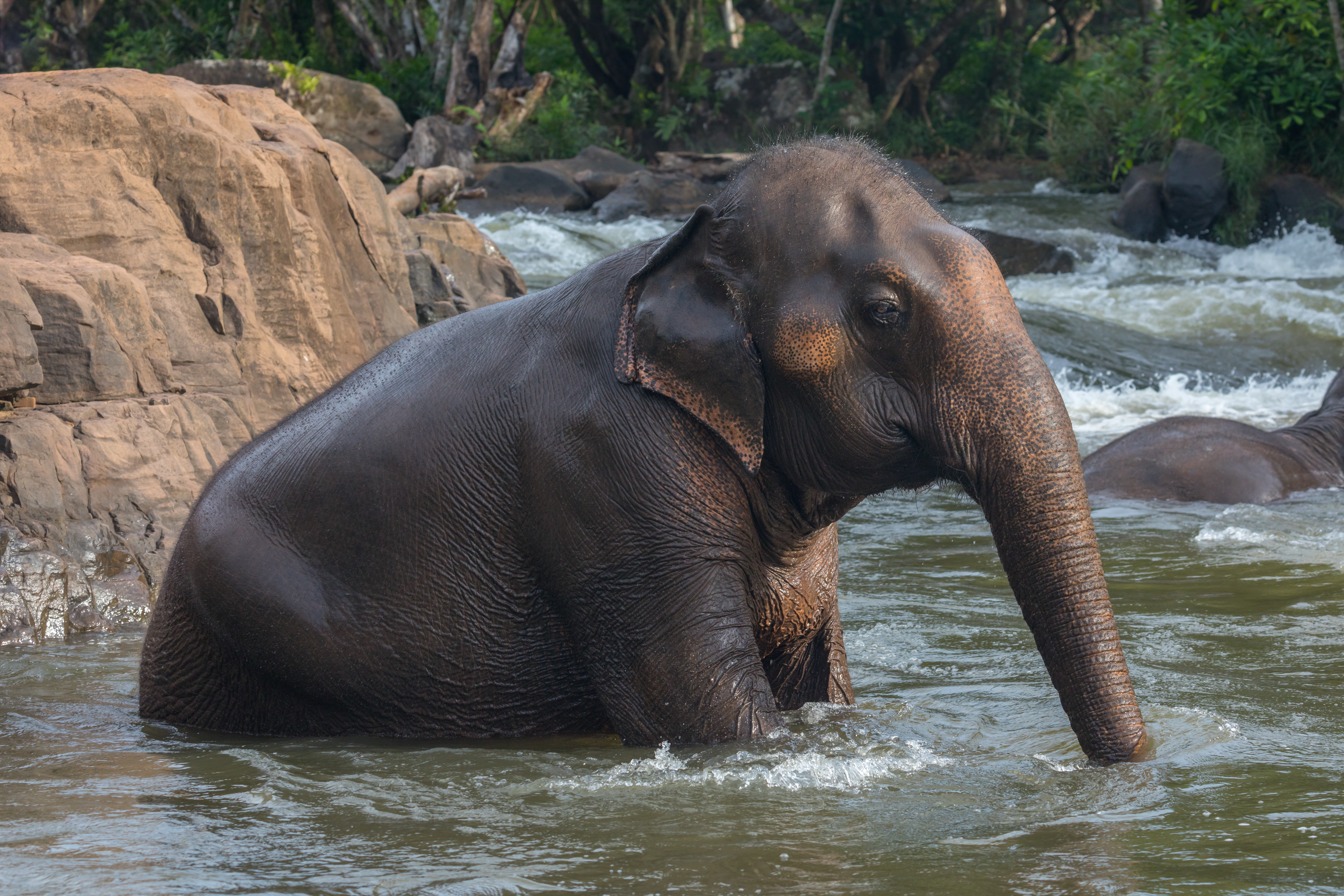
Asiatic elephant

Asiatic elephant

Bangladesh, Sri Lanka, Indonesia, Cambodia, Thailand
Status
Endangered

IUCN conservation assessment category

Habitat
Forest, Grassland, Shrubland

Primary ecological niche & biome

Diet
seeds, plant shoots, grasses, and wild berries

Dietary type and primary food source

Activity
crepuscular

Diurnal, nocturnal, or active patterns

Scientific Summary

GBIF Taxonomic Backbone & Wikipedia Registry Profile

Movements, Home range and Social organization. Similar to African elephants, a hierarchical social structure is suggested for Asian Elephants. However the degree of bonding across socialtiers appears to be much lower than that found in well-described savanna systems and may be more similar to that speculated for African Forest Elephants. In part this may be due to similarities in habitat, where widely distributed resources limit the potential for consistently large aggregations. Female core social groups are genetically related (primarily being mother — calf groups), and males disperse from their natal groups and appearto settle away from their natal range. Little is known about Asian Elephant ranging patterns, but it appears home range size and daily movement patterns are smaller than those of xeric African Savanna Elephants (Loxodonta africana) and possibly similar in scope to those of African Forest Elephants (L. ¢ yclotis), which show a high degree of individual variability. Range is typically highly restricted by human activity, which is likely a major determinant of movement behavior. The few studies that have been undertaken suggest elephant movements are largely in response to human activity and density.
Biology & Conservation

Ecologically, the conservation status of Asiatic elephant is officially designated as Endangered. Current field registries estimate a global population composed of an unquantified number of individuals, making habitat preservation critical to maintaining their wild populations.

It is typically endemic to forest, grassland, shrubland, showing great physiological synergy with its surroundings. In terms of dietary preferences, it relies primarily on a diet of seeds, plant shoots, grasses, and wild berries. It exhibits specialized adaptations centered around a crepuscular activity pattern, optimizing its energy conservation and interactions within its native ecosystem. The species has a typical natural lifespan of approximately 15 years, allowing it to adapt and mature through structured generational cycles.

Ongoing biological monitoring and ecological advocacy emphasize the importance of protecting this species. The stability of its food chain and the prevention of fragmentation in its primary range are vital for the continued survival of Asiatic elephant.

Energy & Activity Profile
Habitat & Adaptation Index
Quick Facts
Native RangeBangladesh, Sri Lanka, Indonesia, Cambodia, Thailand
Habitat RangeForest, Grassland, Shrubland
Lifespan15 Yrs
StatusEndangered
ScientificElephas maximus
Registry Info
Lifespan15 years
KingdomAnimalia
FamilyElephantidae