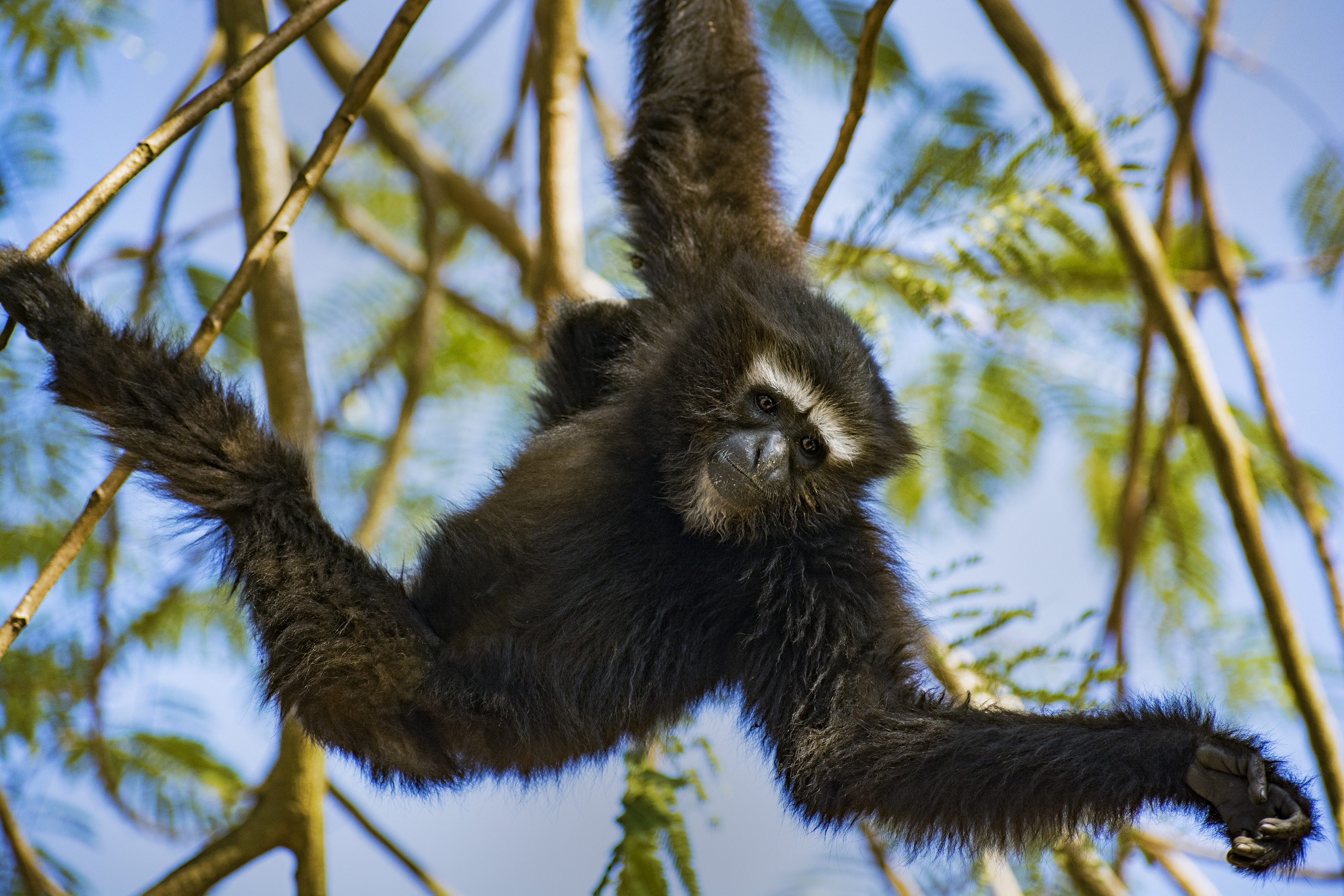
Symphony of Horizon Logo
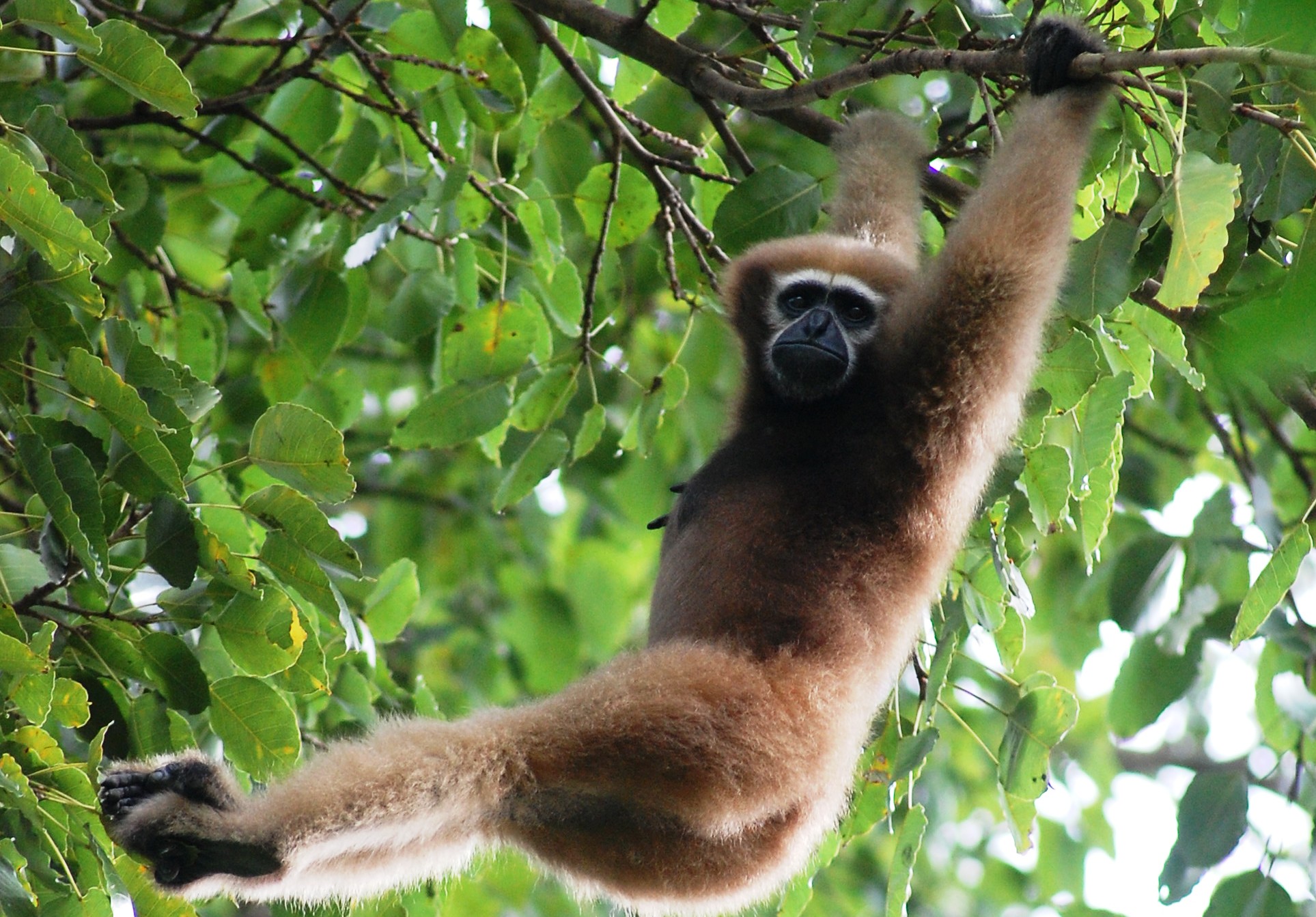
western hoolock gibbon

western hoolock gibbon

Bangladesh, Myanmar, India
Status
Endangered

IUCN conservation assessment category

Habitat
Forest, Terrestrial, Canopy

Primary ecological niche & biome

Diet
ripe fruits, seeds, plant sap, and occasional insects

Dietary type and primary food source

Activity
primarily diurnal

Diurnal, nocturnal, or active patterns

Scientific Summary

GBIF Taxonomic Backbone & Wikipedia Registry Profile

Activity patterns. In Bangladesh, Western Hoolock Gibbons spend their days feeding (30 - 8 %), foraging (25 - 8 %), resting (27 - 5 %), and traveling (7 - 4 %), besides calling and engaging in territorial behavior and play. In India, play and grooming activities contribute less than 10 % oftheir daily activities. They rest and play more in the longer days of summer. Gibbons are active for 8 - 10 hours, starting at dawn or in the early morning, waking earlier in summer than winter. Pairs of Western Hoolock Gibbons call in the morning before leaving their sleeping sites on most but not all days and sometimes in the afternoon before retiring. They alternate their calls as a “ double solo ” rather than producing duets. Feeding dominates the morning hours and rest in the early afternoon. Activity ends usually several hours before sunset, possibly to avoid competing with other primates at their feeding trees. Preferred sleeping sites are emergenttrees, often those infested with epiphytes; mid-canopy trees are less preferred. A female and her infant sleep together, generally with the adult male; older offspring sleep separately.
Biology & Conservation

Ecologically, the conservation status of western hoolock gibbon is officially designated as Endangered. Current field registries estimate a global population composed of an unquantified number of individuals, making habitat preservation critical to maintaining their wild populations.

It is typically endemic to forest, terrestrial, canopy, showing great physiological synergy with its surroundings. In terms of dietary preferences, it relies primarily on a diet of ripe fruits, seeds, plant sap, and occasional insects. It exhibits specialized adaptations centered around a primarily diurnal activity pattern, optimizing its energy conservation and interactions within its native ecosystem. The species has a typical natural lifespan of approximately 25 years, allowing it to adapt and mature through structured generational cycles.

Ongoing biological monitoring and ecological advocacy emphasize the importance of protecting this species. The stability of its food chain and the prevention of fragmentation in its primary range are vital for the continued survival of western hoolock gibbon.

Energy & Activity Profile
Habitat & Adaptation Index
Quick Facts
Native RangeBangladesh, Myanmar, India
Habitat RangeForest, Terrestrial, Canopy
Lifespan25 Yrs
StatusEndangered
ScientificHoolock hoolock
Registry Info
Lifespan25 years
KingdomAnimalia
FamilyHylobatidae