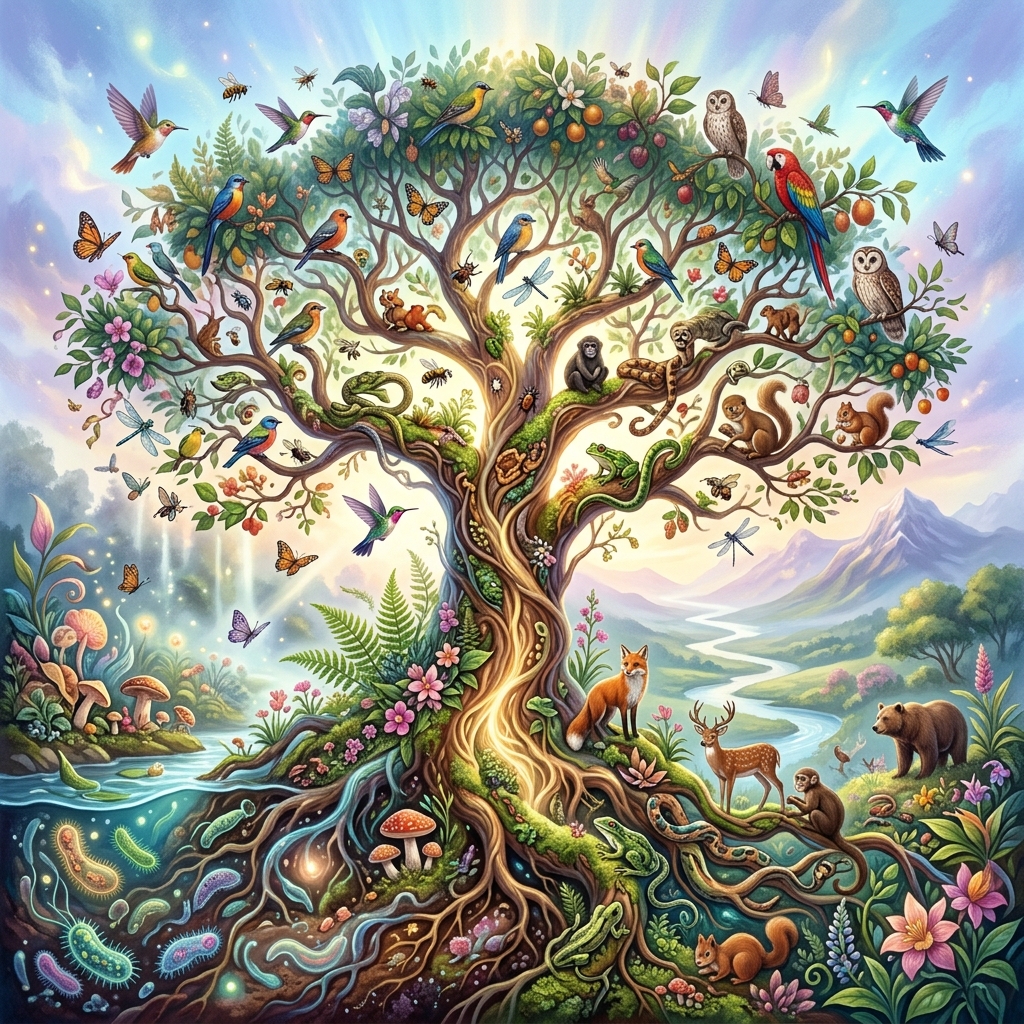
Symphony of Horizon
IUCN conservation assessment category
Primary ecological niche & biome
Dietary type and primary food source
Diurnal, nocturnal, or active patterns
GBIF Taxonomic Backbone & Wikipedia Registry Profile
Ecologically, the conservation status of elima bidji is officially designated as Not Evaluated. Current field registries estimate a global population composed of an unquantified number of individuals, making habitat preservation critical to maintaining their wild populations.
It is typically endemic to deciduous woodlands, tropical rainforest canopies, and fertile alluvial valleys, showing great physiological synergy with its surroundings. In terms of dietary preferences, it relies primarily on a diet of c3 autotrophic photosynthesis, deep root mineral absorption, and carbon sequestration. It exhibits specialized adaptations centered around a deciduous summer foliage, vernal flowering, and seasonal seed dispersal activity pattern, optimizing its energy conservation and interactions within its native ecosystem. The species has a typical natural lifespan of approximately 150 years, allowing it to adapt and mature through structured generational cycles.
Ongoing biological monitoring and ecological advocacy emphasize the importance of protecting this species. The stability of its food chain and the prevention of fragmentation in its primary range are vital for the continued survival of elima bidji.
| Native Range | Congo, Gabon |
| Habitat Range | deciduous woodlands, tropical rainforest canopies, and fertile alluvial valleys |
| Lifespan | 150 Yrs |
| Status | Data Deficient |
| Scientific | Icacina mannii |
| Lifespan | 150 years |
| Kingdom | Plantae |
| Family | Icacinaceae |
Be the first explorer to rate and share your experience here!
No reviews yet. Be the first to share your experience!
Capture the majesty of elima bidji through the eyes of the community.
The gallery is currently empty. Start the journey by uploading the first photo!