Symphony of Horizon Logo
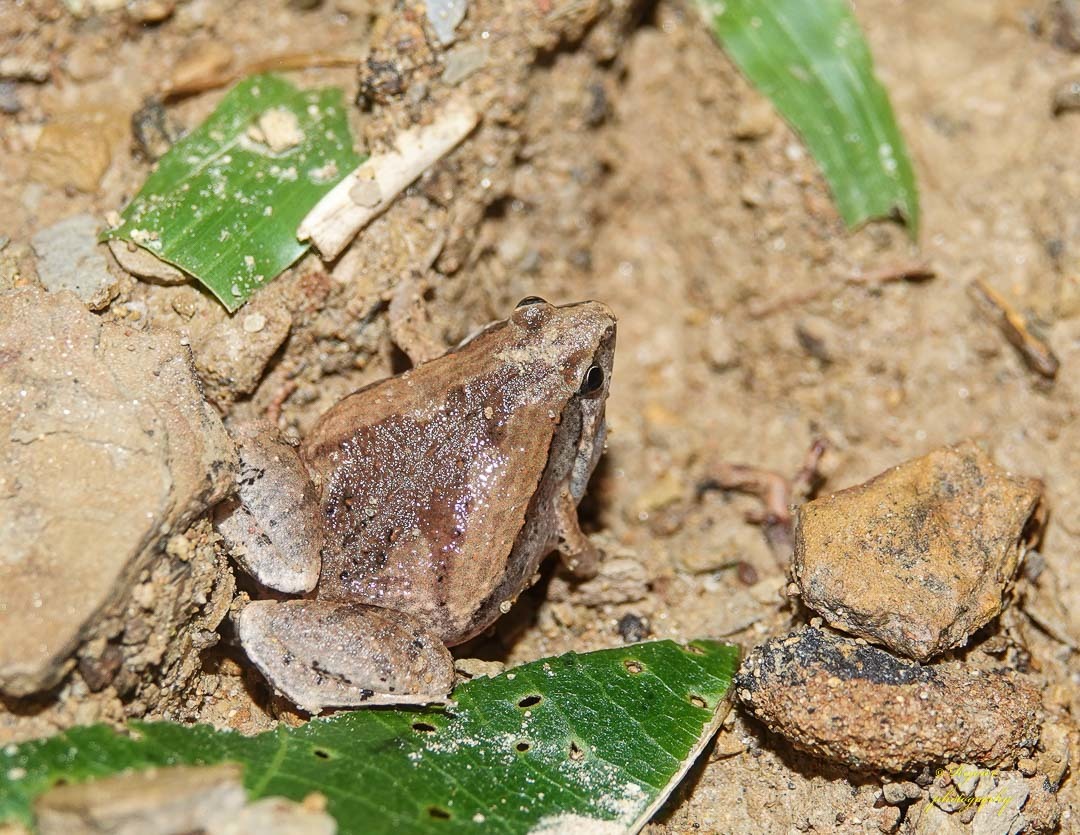
Microhyla mymensinghensis

Microhyla mymensinghensis

Bangladesh
Status
Unknown

IUCN conservation assessment category

Habitat
humid forest floors, seasonal pools, and damp leaf litter

Primary ecological niche & biome

Diet
nocturnal beetles, plant flies, moths, and small insects

Dietary type and primary food source

Activity
primarily nocturnal

Diurnal, nocturnal, or active patterns

Scientific Summary

GBIF Taxonomic Backbone & Wikipedia Registry Profile

Diagnosis. The new species M. mymensinghensis is allocated to genus Microhyla due to its smooth or warty skin, absence of vomerine teeth, hidden tympanum, and sister relationships with other microhylid frogs (Hasan et al. 2012; Hasan et al. unpublished data). Comparison of the 16 S-rrn and / or cytb sequences of the new species with its congeners in DDBJ / EMBL / GenBank databases from South and Southeast Asia including Bangladesh, India and Myanmar, denotes that any known microhylid frogs do not correspond to this new species and merits its distinctness. Considering the molecular analyses and morphological characters i. e. a crescent-shaped marking on the anus, an X-shaped marking on the dorsum and the tibio-tarsal articulation of the new species deduct it from all of the known Microhyla species from South and Southeast Asia, particularly from Bangladesh and its neighbor countries; but make confusion with only M. mukhlesuri, M. fissipes, M. heymonsi and M. ornata. However, the new species differs from M. ornata by the presence of an outer metatarsal tubercle (vs. outer metatarsal tubercle is absence in M. ornata) and from M. heymonsi by smaller size (SVL = 14.2 – 21.3 mm) (vs. 22 – 26 mm in M. heymonsi) (Chanda 2002) and presence of X-shaped marking on the dorsal (this kind of marking absence in M. heymonsi). The new species can be distinguished from its most near congener M. fissipes by the extension of tibiotarsal articulation until eye to the tip of snout (vs. reached only until eye in M. fissipes). Most importantly, the new species differs from M. mukhlesuri by smaller body size, SVL = 16.5 ± 1.8 mm (vs. SVL = 17.8 ± 1.4 mm in M. mukhlesuri), higher forearm width, FAW = 0.9 ± 0.1 mm (vs. FAW = 0.7 ± 0.1 mm in M. mukhlesuri) (see Table 1), and presence of crescent shape marking on the anus (vs. this marking looks “ U ” shape in the M. mukhlesuri). Further, like with M. mukhlesuri, none of the old nomina of Microhyla corresponds to this new species. In conclusion, this new species is small frog with SVL of 14.2 – 17.6 mm in males and 15.2 – 21.3 mm in females. Head length subequal head width, finger formula 1 <4 <2 <3, toe formula 1 <5 <2 <3 <4, fingers free and slender, tips of fingers and toes not widened, rudimentary web between toes and subarticular tubercles distinct (Figs. 4 G, 4 H). TIL / SVL ratio was 0.57 ± 0.04, whereas this value was 0.54 ± 0.03 in M. mukhlesuri, and 0.50 ± 0.02 in M. fissipes from Taiwan. Tibiotarsal articulation extends from between the eyes to the tip of the snout, while it reaches near the eye in M. fissipes and in front of the shoulders in M. ornata. Phylogenetically, it shows sister relationship with M. mukhlesuri plus M. fissipes with high genetic divergences (Hasan et al. 2012; Hasan et al. unpublished data; this study).
Biology & Conservation

Ecologically, the conservation status of Microhyla mymensinghensis is officially designated as Unknown. Current field registries estimate a global population composed of an unquantified number of individuals, making habitat preservation critical to maintaining their wild populations.

It is typically endemic to humid forest floors, seasonal pools, and damp leaf litter, showing great physiological synergy with its surroundings. In terms of dietary preferences, it relies primarily on a diet of nocturnal beetles, plant flies, moths, and small insects. It exhibits specialized adaptations centered around a primarily nocturnal activity pattern, optimizing its energy conservation and interactions within its native ecosystem. The species has a typical natural lifespan of approximately 6 years, allowing it to adapt and mature through structured generational cycles.

Ongoing biological monitoring and ecological advocacy emphasize the importance of protecting this species. The stability of its food chain and the prevention of fragmentation in its primary range are vital for the continued survival of Microhyla mymensinghensis.

Energy & Activity Profile
Habitat & Adaptation Index
Quick Facts
Native RangeBangladesh
Habitat Rangehumid forest floors, seasonal pools, and damp leaf litter
Lifespan6 Yrs
StatusUnknown
ScientificMicrohyla mymensinghensis
Registry Info
Lifespan6 years
KingdomAnimalia
FamilyMicrohylidae