Symphony of Horizon Logo
Long-legged Myotis

Long-legged Myotis

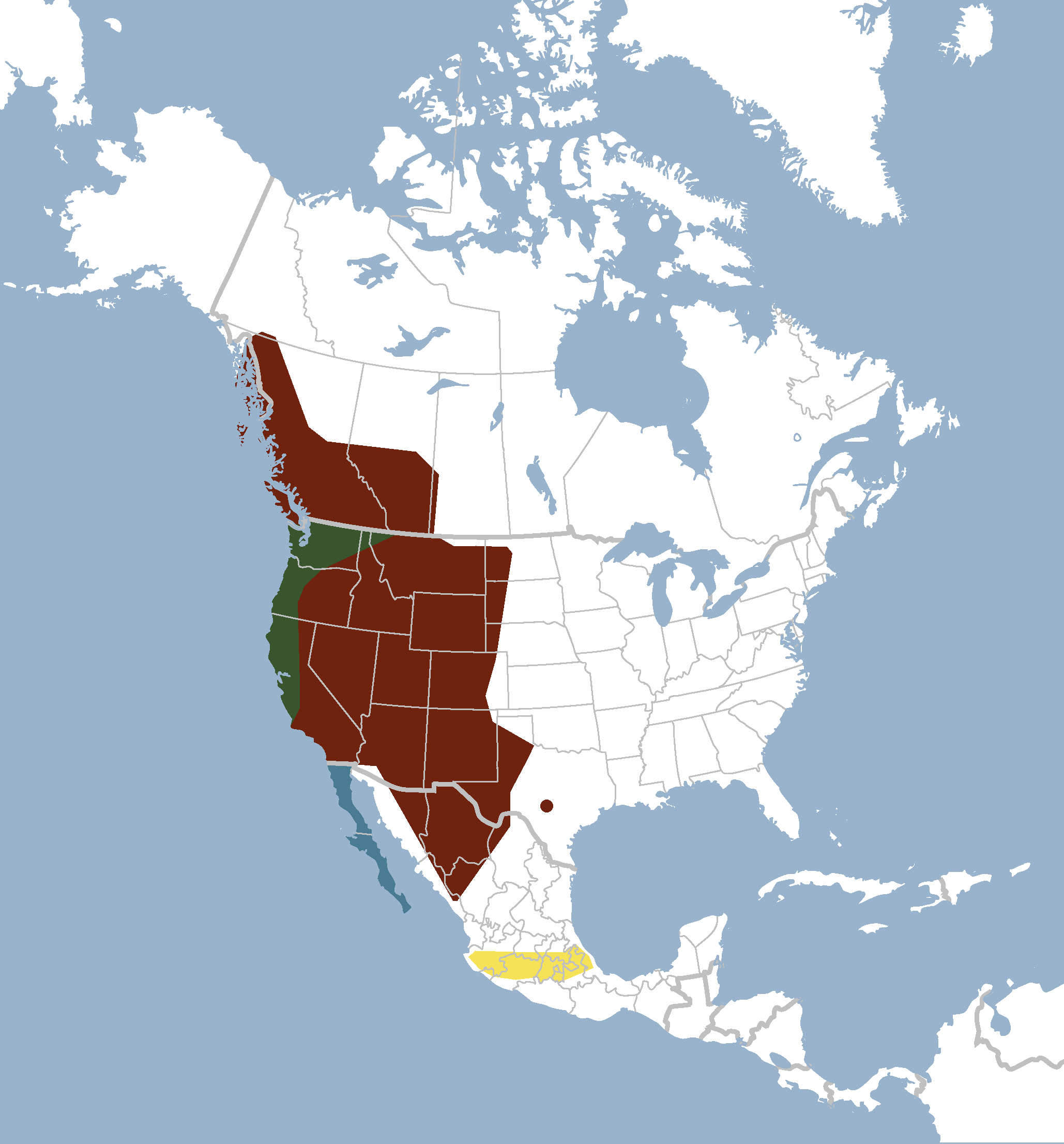
Mexico, Canada
Status
Least Concern

IUCN conservation assessment category

Habitat
Forest, Wetland, Freshwater, Desert, Mountain

Primary ecological niche & biome

Diet
mosquitoes, midges, and small flying bugs

Dietary type and primary food source

Activity
nocturnal and crepuscular

Diurnal, nocturnal, or active patterns

Scientific Summary

GBIF Taxonomic Backbone & Wikipedia Registry Profile

Activity patterns. Long-legged Myotis leave roosts in early evening well before dark and generally eat their fill in the first 30 minutes of foraging, but there is a peak in general activity in the first 3 — 4 hours after sunset. Individuals rest in night roosts in buildings, caves, or mines. They have been most active at temperatures of 12 - 18 ° C, but they likely have a wider temperature range for activity. During the day, they roost primarily in trees but also occasionally rock crevices and abandoned buildings; caves are not used during the day. In winter, these bats congregate in caves and mines to hibernate. Calls are steep FM sweeps, with average start frequency of 89 kHz, end frequency of 40 kHz, peak frequency of 46 kHz, and maximum duration of 10 milliseconds in Arizona.
Biology & Conservation

Ecologically, the conservation status of Long-legged Myotis is officially designated as Least Concern. Current field registries estimate a global population composed of an unquantified number of individuals, making habitat preservation critical to maintaining their wild populations.

It is typically endemic to forest, wetland, freshwater, desert, mountain, showing great physiological synergy with its surroundings. In terms of dietary preferences, it relies primarily on a diet of mosquitoes, midges, and small flying bugs. It exhibits specialized adaptations centered around a nocturnal and crepuscular activity pattern, optimizing its energy conservation and interactions within its native ecosystem. The species has a typical natural lifespan of approximately 15 years, allowing it to adapt and mature through structured generational cycles.

Ongoing biological monitoring and ecological advocacy emphasize the importance of protecting this species. The stability of its food chain and the prevention of fragmentation in its primary range are vital for the continued survival of Long-legged Myotis.

Energy & Activity Profile
Habitat & Adaptation Index
Quick Facts
Native RangeMexico, Canada
Habitat RangeForest, Wetland, Freshwater, Desert, Mountain
Lifespan15 Yrs
StatusLeast Concern
ScientificMyotis volans
Registry Info
Lifespan15 years
KingdomAnimalia
FamilyVespertilionidae