Symphony of Horizon Logo
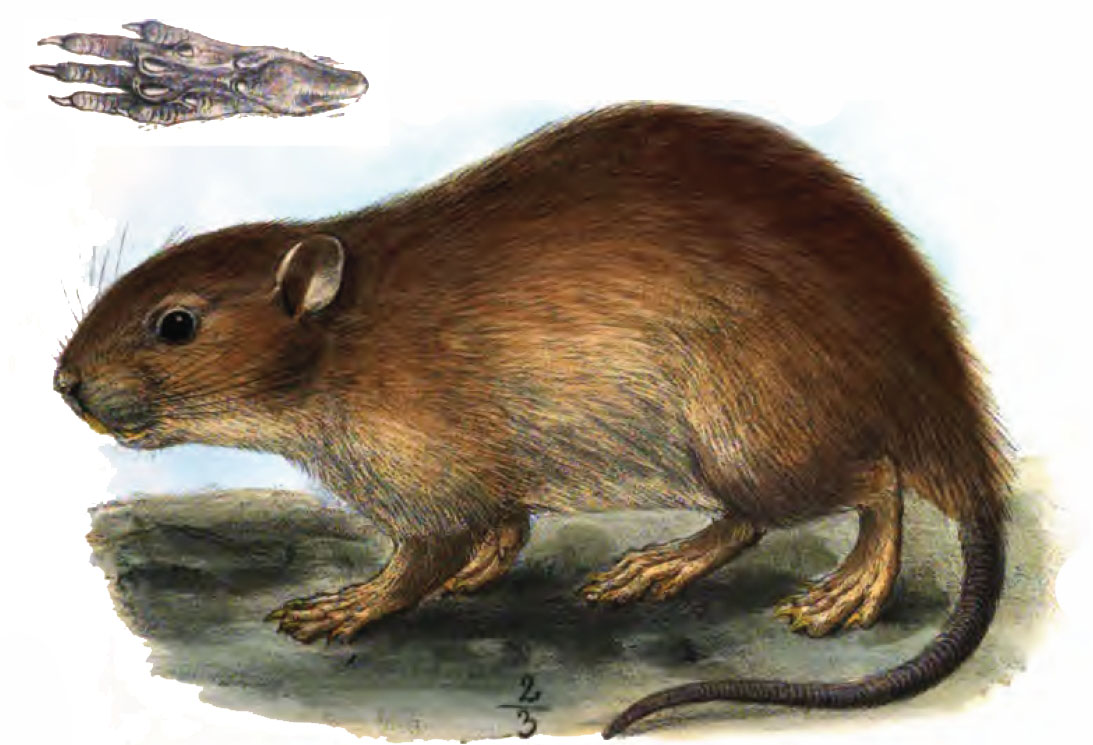
Short-tailed Nesokia

Short-tailed Nesokia

Saudi Arabia, Turkmenistan, Afghanistan, Bangladesh, Tajikistan
Status
Least Concern

IUCN conservation assessment category

Habitat
Forest, Grassland, Freshwater, Mountain

Primary ecological niche & biome

Diet
roots, leaves, forest seeds, and occasional insects

Dietary type and primary food source

Activity
nocturnal and crepuscular

Diurnal, nocturnal, or active patterns

Scientific Summary

GBIF Taxonomic Backbone & Wikipedia Registry Profile

Habitat. Tropical and subtropical dry deciduous forests, scrublands, grasslands, arable land, pastures, and plantations from sea level to elevations of ¢. 1600 m. Short-tailed Bandicoot Rats prefer areas with moist soil near permanent water sources. They are found in more mountainous regions in China. Food and Feeding. The Short-tailed Bandicoot Rat is herbivorous, subsisting on foods found while digging burrows and plants around their burrow. Diets contain roots, grasses, grains, vegetables, and fruits from cultivated fields. On occasion, large quantities of food is stored, probably as a result of diminishing food resources or seasonal change. In a date palm (Phoenix dactylifera, Arecaceae) orchard in Balochistan, diet consisted of 37 - 6 % date palm fruit and 18 % date palm stems; grasses and other unidentified leaves and roots made up the rest of the diet. Breeding. Short-tailed Bandicoot Rats seem to reproduce year-round, although activity peaks in monsoon season. Litters have 1 - 10 young; gestationslast c. 17 days. Females can breed multiple times a year, usually c. 3 times. Activity patterns. The Short-tailed Bandicoot Rat is nocturnal; foraging, general movements on the ground’s surface, and probably breeding occur at night. It is terrestrial but primarily fossorial, creating burrow systems in moist soils, consisting of a few to many tunnels, storage chambers, and nesting chamber. Movements, Home range and Social organization. Storage chambers are not lined with vegetation and are expansive; nesting chambers are lined with finely chewed vegetation and are smaller (c. 30 cm wide). Burrows are usually 15 - 60 cm underground and found around permanent bodies of water and have been found in canals. Burrows can be as long as 23 m, although smaller burrows are more common. Runways over the surface connect burrows. Usually, only a single individual or a female with young / juveniles occupies a burrow.
Biology & Conservation

Ecologically, the conservation status of Short-tailed Nesokia is officially designated as Least Concern. Current field registries estimate a global population composed of an unquantified number of individuals, making habitat preservation critical to maintaining their wild populations.

It is typically endemic to forest, grassland, freshwater, mountain, showing great physiological synergy with its surroundings. In terms of dietary preferences, it relies primarily on a diet of roots, leaves, forest seeds, and occasional insects. It exhibits specialized adaptations centered around a nocturnal and crepuscular activity pattern, optimizing its energy conservation and interactions within its native ecosystem. The species has a typical natural lifespan of approximately 3 years, allowing it to adapt and mature through structured generational cycles.

Ongoing biological monitoring and ecological advocacy emphasize the importance of protecting this species. The stability of its food chain and the prevention of fragmentation in its primary range are vital for the continued survival of Short-tailed Nesokia.

Energy & Activity Profile
Habitat & Adaptation Index
Quick Facts
Native RangeSaudi Arabia, Turkmenistan, Afghanistan, Bangladesh, Tajikistan
Habitat RangeForest, Grassland, Freshwater, Mountain
Lifespan3 Yrs
StatusLeast Concern
ScientificNesokia indica
Registry Info
Lifespan3 years
KingdomAnimalia
FamilyMuridae