Symphony of Horizon Logo
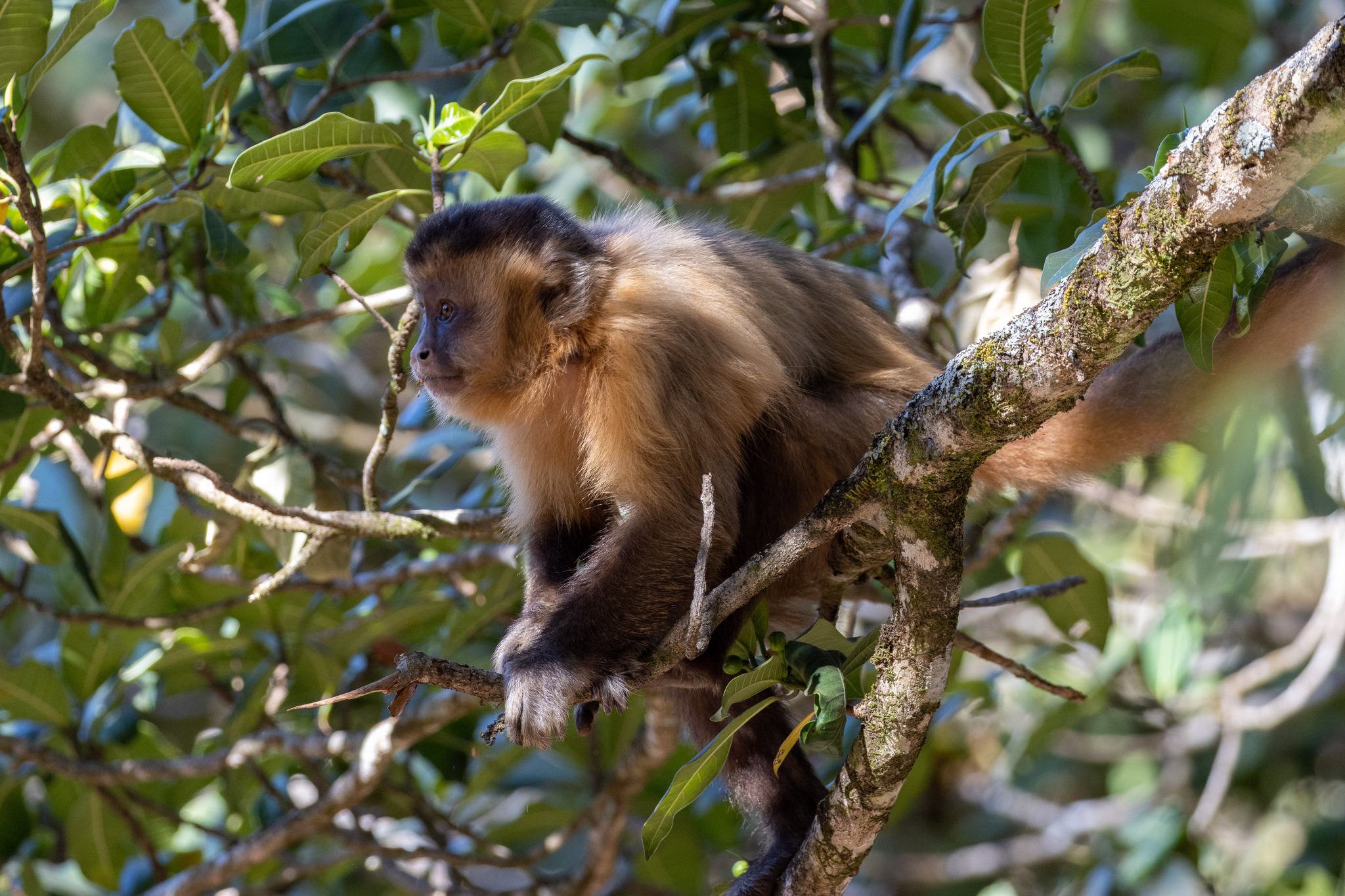
Bearded Capuchin

Bearded Capuchin

Brazil
Status
Near Threatened

IUCN conservation assessment category

Habitat
Forest, Grassland, Freshwater, Desert, Mountain

Primary ecological niche & biome

Diet
fresh fruits, young leaves, seeds, flowers, and forest insects

Dietary type and primary food source

Activity
diurnal

Diurnal, nocturnal, or active patterns

Scientific Summary

GBIF Taxonomic Backbone & Wikipedia Registry Profile

Movements, Home range and Social organization. Group sizes of Bearded Capuchins in the caatinga of Serra da Capivara National Park in Piaui State average nine individuals with a maximum of 16. One group of ten had two males, five females, and three juveniles. Two groups in Fazenda Boa Vista had eight individuals and the other had 19 individuals, with home ranges of ¢. 300 ha. A very large group of 53 individuals was found in the arboreal caatinga in the western part of Rio Grande do Norte. Groups of Bearded Capuchins are cohesive and do notsplit into subgroups. Groups of Black-horned Capuchins spread out while foraging, but Bearded Capuchins in these caatinga groups feed from concentrated small clumps of palm fruits, and rates of foodrelated aggression are correspondingly higher. Unlike Black-horned Capuchins, female Bearded Capuchins establish a clear dominance hierarchy.
Biology & Conservation

Ecologically, the conservation status of Bearded Capuchin is officially designated as Near Threatened. Current field registries estimate a global population composed of an unquantified number of individuals, making habitat preservation critical to maintaining their wild populations.

It is typically endemic to forest, grassland, freshwater, desert, mountain, showing great physiological synergy with its surroundings. In terms of dietary preferences, it relies primarily on a diet of fresh fruits, young leaves, seeds, flowers, and forest insects. It exhibits specialized adaptations centered around a diurnal activity pattern, optimizing its energy conservation and interactions within its native ecosystem. The species has a typical natural lifespan of approximately 25 years, allowing it to adapt and mature through structured generational cycles.

Ongoing biological monitoring and ecological advocacy emphasize the importance of protecting this species. The stability of its food chain and the prevention of fragmentation in its primary range are vital for the continued survival of Bearded Capuchin.

Energy & Activity Profile
Habitat & Adaptation Index
Quick Facts
Native RangeBrazil
Habitat RangeForest, Grassland, Freshwater, Desert, Mountain
Lifespan25 Yrs
StatusNear Threatened
ScientificSapajus libidinosus
Registry Info
Lifespan25 years
KingdomAnimalia
FamilyCebidae